
Targeted Resume: What It Is and How to Make One (2026 Guide)

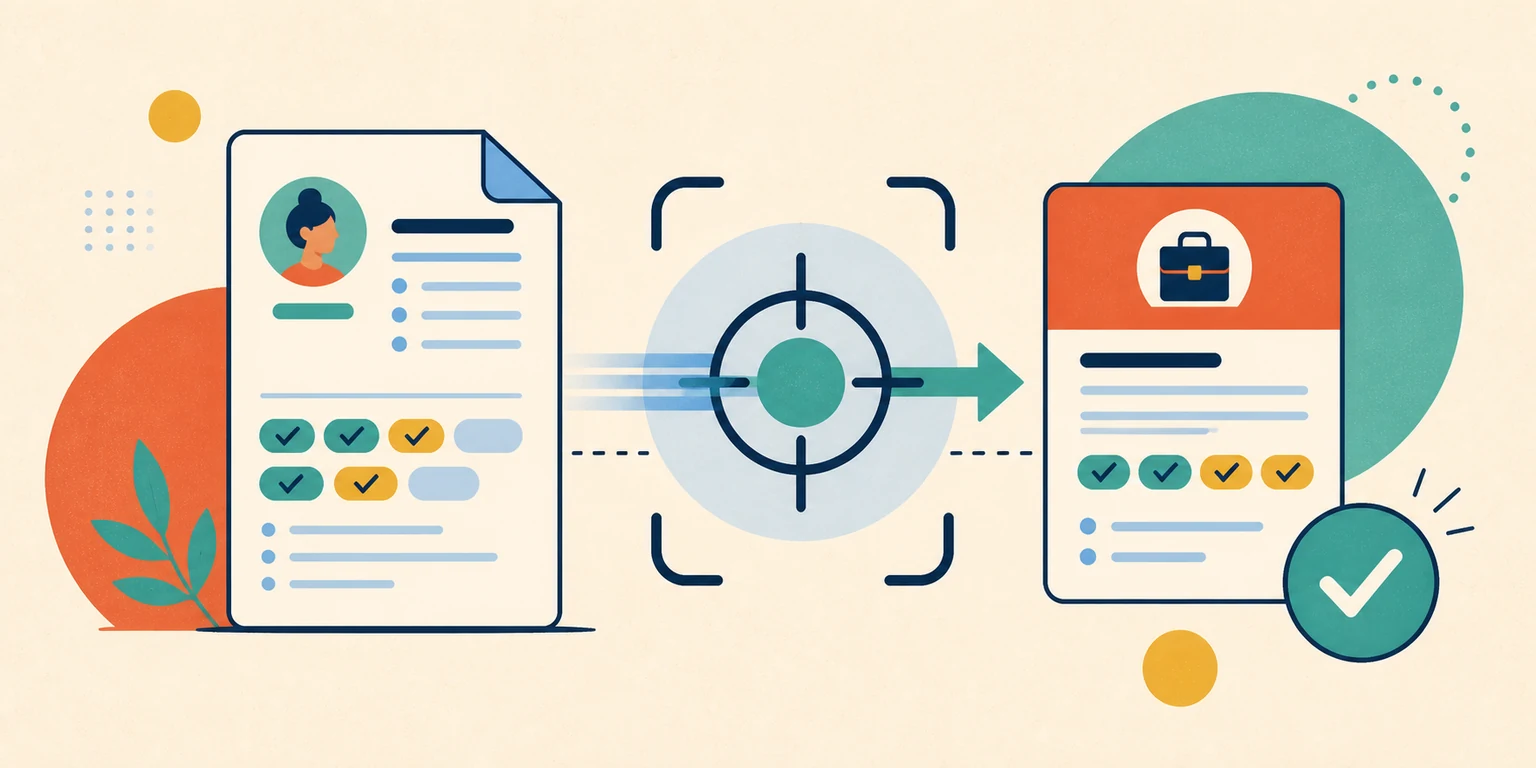
A targeted resume is a version of your resume rewritten for one specific job: the summary speaks to that role, the skills section mirrors that posting, and the experience bullets lead with whatever this employer cares about most. It’s the opposite of the one-size-fits-all resume you keep attached to every application “just in case.”
If that sounds like a lot of work per application — it used to be. This guide covers what actually changes in a targeted resume, why it outperforms a general one by such a wide margin, and how to produce one in minutes instead of an hour.
Targeted Resume vs. General Resume: What’s Actually Different
The difference isn’t the facts — your history doesn’t change. It’s the emphasis:
| Element | General resume | Targeted resume |
|---|---|---|
| Professional summary | Broad description of you | Names the role, mirrors the job’s top 2–3 requirements |
| Skills section | Everything you can do | The intersection of your skills and their posting, their phrasing first |
| Experience bullets | Chronological accomplishments | Reordered so the most job-relevant wins come first |
| Keywords | Whatever you naturally wrote | Matched to the posting’s exact terms (ATS-critical) |
| Length decisions | Hard to cut anything | Easy: whatever this job doesn’t need gets trimmed |
Two things make this matter more in 2026 than ever:
1. The ATS reads literally. Over 90% of large companies filter applications through Applicant Tracking Systems, and they match against the job description’s vocabulary. If the posting says “data analysis” and you wrote “analyzing data,” a strict system may not connect them. A targeted resume closes those gaps on purpose — our guide to job search keywords goes deep on how the matching works.
2. Recruiters skim for fit, not quality. The first human pass on your resume lasts seconds and answers one question: does this person match this role? A targeted resume answers it in the top third of the page. A general resume makes the recruiter dig — and they don’t.
The numbers back it up: 83% of recruiters say they prefer customized resumes, and tailored applications consistently show higher response rates than generic ones.
How to Make a Targeted Resume, Step by Step
Step 1: Deconstruct the Job Posting
Read the posting like a checklist, not a narrative. Pull out:
- Hard requirements — tools, certifications, years of experience, degree. These are usually the ATS knockout questions.
- Repeated terms — anything mentioned twice or more is a priority for them. Repeat it (truthfully) in your resume.
- The first three bullets of the responsibilities section — job descriptions front-load what the role actually is.
- Their exact phrasing — “customer success,” “client services,” and “account management” might be the same job, but use their words.
Step 2: Rewrite the Top Third
The summary and skills section do most of the targeting work:
- Summary: one to three lines connecting you to this role by name. “Product marketing manager with 6 years in B2B SaaS launching products into competitive markets” beats “versatile marketing professional” for the job that asked for exactly that.
- Skills: lead with the skills the posting asked for, in their phrasing. Cut skills the job doesn’t care about — they’re diluting the signal.
Step 3: Re-Order and Re-Angle Your Experience Bullets
You’re not inventing anything — you’re choosing which true things to lead with. If the job emphasizes stakeholder management and your third bullet is your stakeholder story, it becomes your first bullet. Where possible, restate accomplishments in the posting’s vocabulary and quantify them: “led cross-functional launch across 3 teams, delivering 2 weeks early” carries keywords and proof.
Step 4: Close the Gaps It Found
A proper targeting pass usually reveals a mismatch or two: the job wants HubSpot and you’ve only mentioned “CRM tools,” or it emphasizes mentoring and you never wrote down that you trained four juniors. Fix what’s fixable — often the experience exists and just never made it onto the page.
Step 5: Check the Format Survives the ATS
Targeting is wasted if the file itself doesn’t parse: standard section headings, no tables or text boxes for critical content, and the right file type — see our breakdown of PDF vs DOCX for resumes if you’re unsure.
The Time Problem (and the 2026 Answer)
Done by hand, that’s 30–60 minutes per job — which is why most people target their resume for the jobs they’re excited about and send the general version everywhere else. That’s backwards: the applications with the generic resume are the ones that needed help most.
This is exactly the work AI is now genuinely good at. Jobcamp’s resume tailoring tool takes your master resume and a job posting URL, and does steps 1–3 automatically: keyword gap analysis, a compatibility score showing how well you match, and a rewritten, ATS-safe targeted resume — plus a matching cover letter. You review, adjust anything that doesn’t sound like you, and apply. Minutes per job, with the targeting quality of the hour-long manual version.
Common Targeted-Resume Mistakes
- Keyword stuffing. Matching the posting’s language is targeting; cramming every phrase in twice is spam, and both the ATS and the recruiter can tell. Weave keywords into real accomplishments.
- Targeting the title but not the content. Changing your summary line while leaving the same generic bullets underneath fools nobody.
- Stretching the truth. Targeting means emphasizing what’s real, never inventing what isn’t — it unravels in the first interview.
- Forgetting the cover letter. A targeted resume with a generic cover letter sends a mixed message. If you’re generating one, generate both.
The Bottom Line
A targeted resume is the same true story, told in the order — and the language — that one specific employer is listening for. It’s the highest-leverage 10 minutes in any application, and in 2026 there’s no longer a time excuse for skipping it.
Stop sending the same resume to every job. Jobcamp builds a targeted, ATS-optimized resume for any job posting in minutes — paste the link, review, apply. Get started for free.